
Introduction
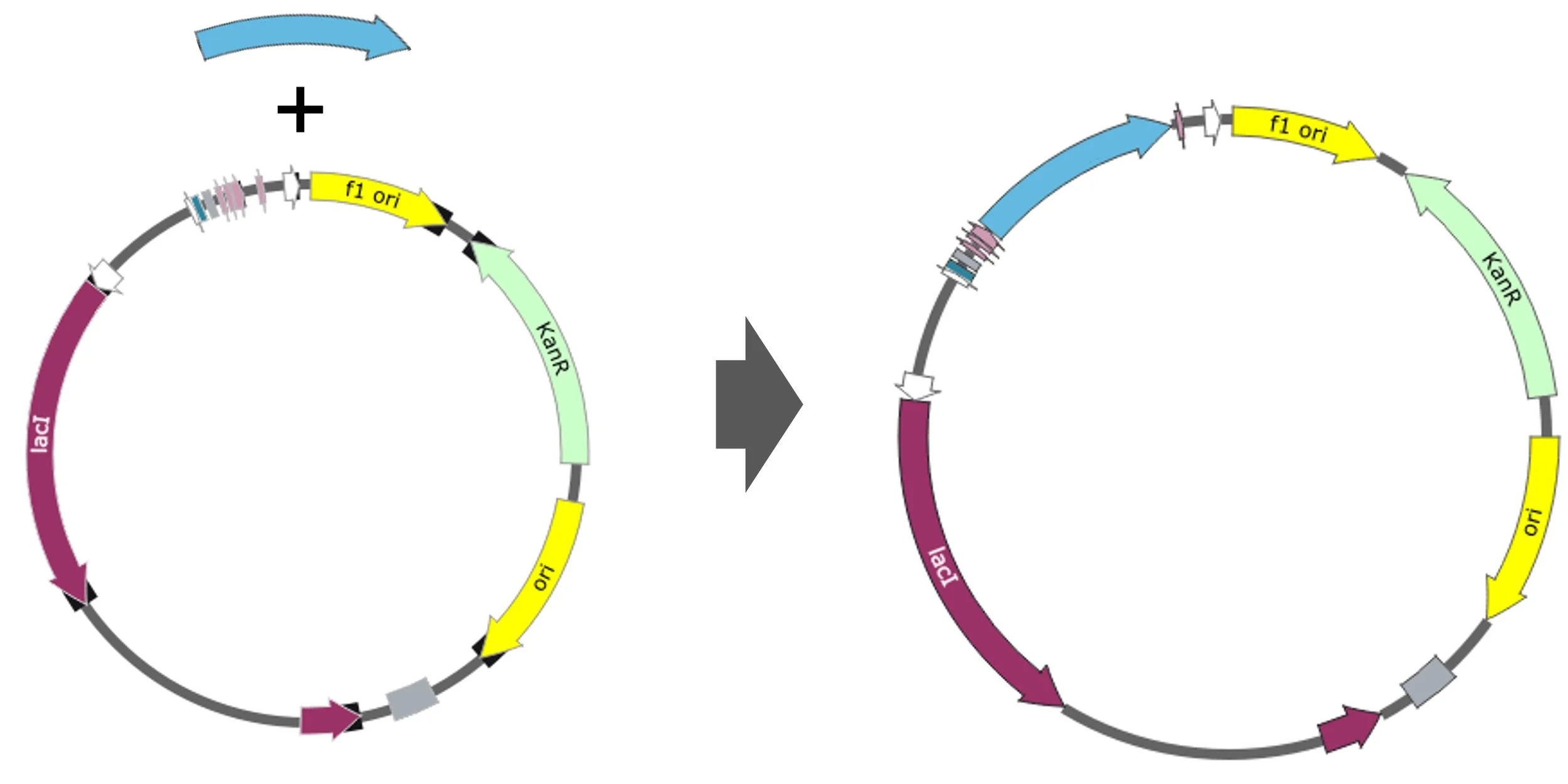
DNA Cloning allows students to construct and manipulate DNA molecules, creating new combinations of genetic information that can be expressed and studied in living cells. By assembling DNA fragments into plasmids, students see how cloning underlies everything from basic gene function studies to biotechnology, medicine, and synthetic biology.
How DNA Cloning fits into the larger scope
Within the Voyager program, DNA Cloning connects upstream steps like PCR and DNA analysis to downstream modules in transformation and protein expression. Students use cloning to move their chosen DNA sequences into plasmid backbones, setting the stage for producing and characterizing their target proteins. This modules reinforces the idea that careful design, verification, and assembly are central to modern molecular biology.
The DNA Cloning module can be further customized with discrete submodules
While the submodules below are often run in sequence as part of a single cloning workflow, they can also be performed independently when appropriate DNA samples, vectors, and controls are available.
Restriction Digest
In this submodule, students use restriction enzymes to cut DNA at specific recognition sites. They learn how enzyme choice, buffer composition, and incubation parameters determine where and how DNA is cleaved, and how restriction maps guide the design of cloning strategies.
DNA Purification
Here, students prepare DNA fragments and vector backbones for assembly by removing enzymes, salts, and other components from previous reactions. They learn how proper sample preparation impacts overall cloning success.
Gibson Assembly
In the Gibson Assembly submodule, students join overlapping DNA fragments in a single, isothermal reaction. They see how careful design of overlapping ends, combined with a coordinated mix of enzymes, enables seamless construction of plasmids without the need for traditional restriction sites. More than other cloning methods, Gibson Assembly encapsulates the key concepts of DNA features and metabolism central to modern biotechnology, including sequence complementarity, DNA annealing, nuclease digestion, nucleic acid polymerization, and ligation. This experience highlights how advances in cloning technologies expand what is possible in genetic engineering and synthetic biology.