

Introduction
DNA Analysis is central to understanding and validating molecular biology experiments. After genetic material has been amplified or modified, analysis methods allow scientists to evaluate DNA quality, quantity, and integrity. From clinical diagnostics and genetic research to environmental testing, these techniques ensure that each experiment is based on accurate and reliable data.
How DNA Analysis first into the larger scope
Within the Voyager program, DNA Analysis serves as a critical checkpoint connecting upstream molecular processes - such as PCR and cloning - to downstream applications in transformation and protein expression. Students use these analytical tools to assess the outcomes of their work, reinforce experimental verification, and build habits of data-driven decision making that define rigorous scientific practice.
DNA Gel Electrophoresis
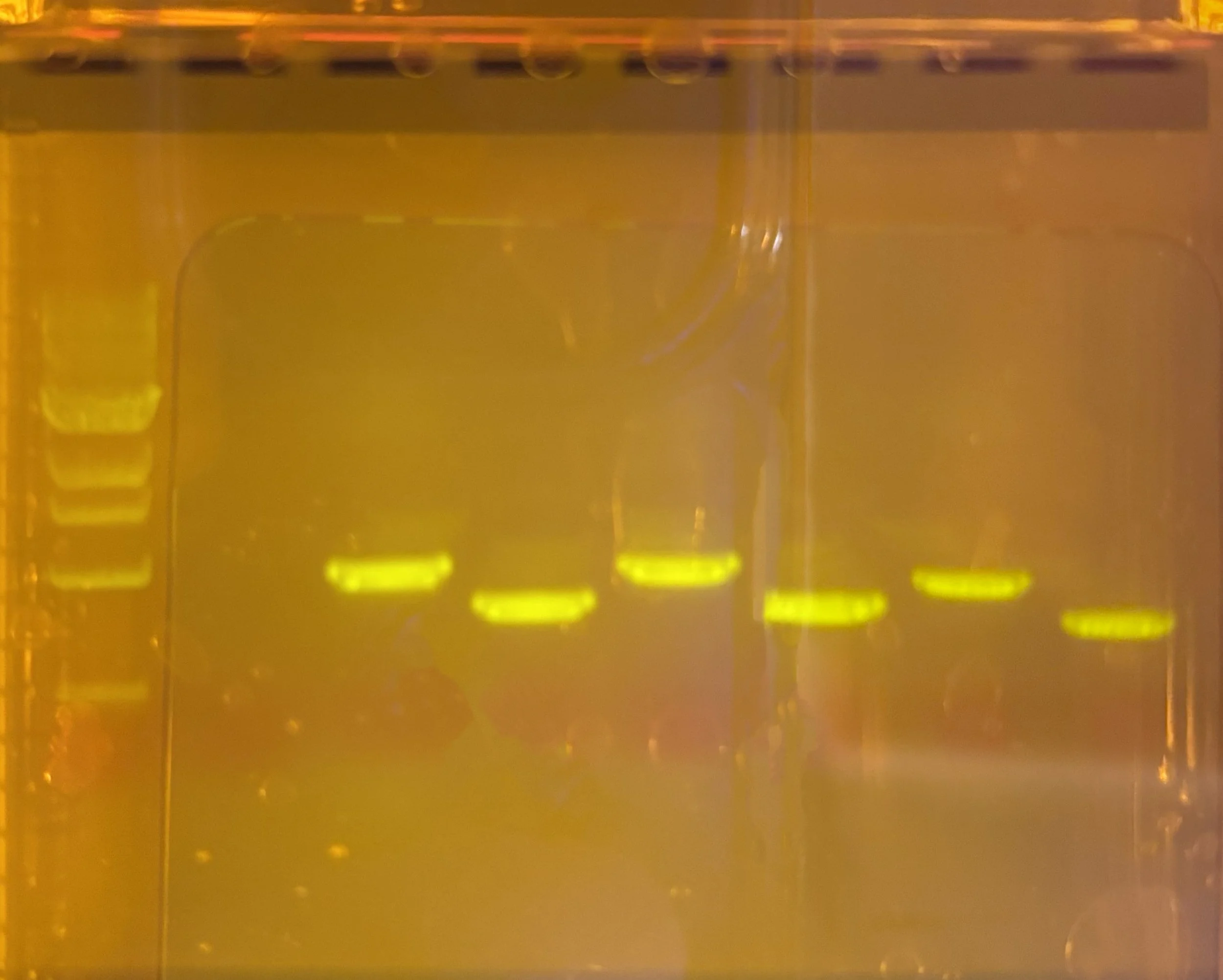
Following amplification, restriction digest, or both, DNA products will be visualized using agarose gel electrophoresis. This technique demonstrates how DNA fragments can be separated by size and observed using safe staining methods, emphasizing the importance of quality checks and evidence-based confirmation. Students also explore how changing gel conditions - such as voltage, agarose concentration, buffer, and run time - affects DNA separation, and how difference settings are chosen for different experimental controls.
DNA Quantification
Students apply spectrophotometric and fluorometric methods to measure nucleic acid concentration and purity. Through this process, they explore how quantitative analysis provides an evidence-based approach for assessing DNA quality prior to cloning, transformation, or other downstream experiments. By interpreting their data, students connect numerical results to biological meaning, building confidence in making informed experimental decisions.