

Introduction
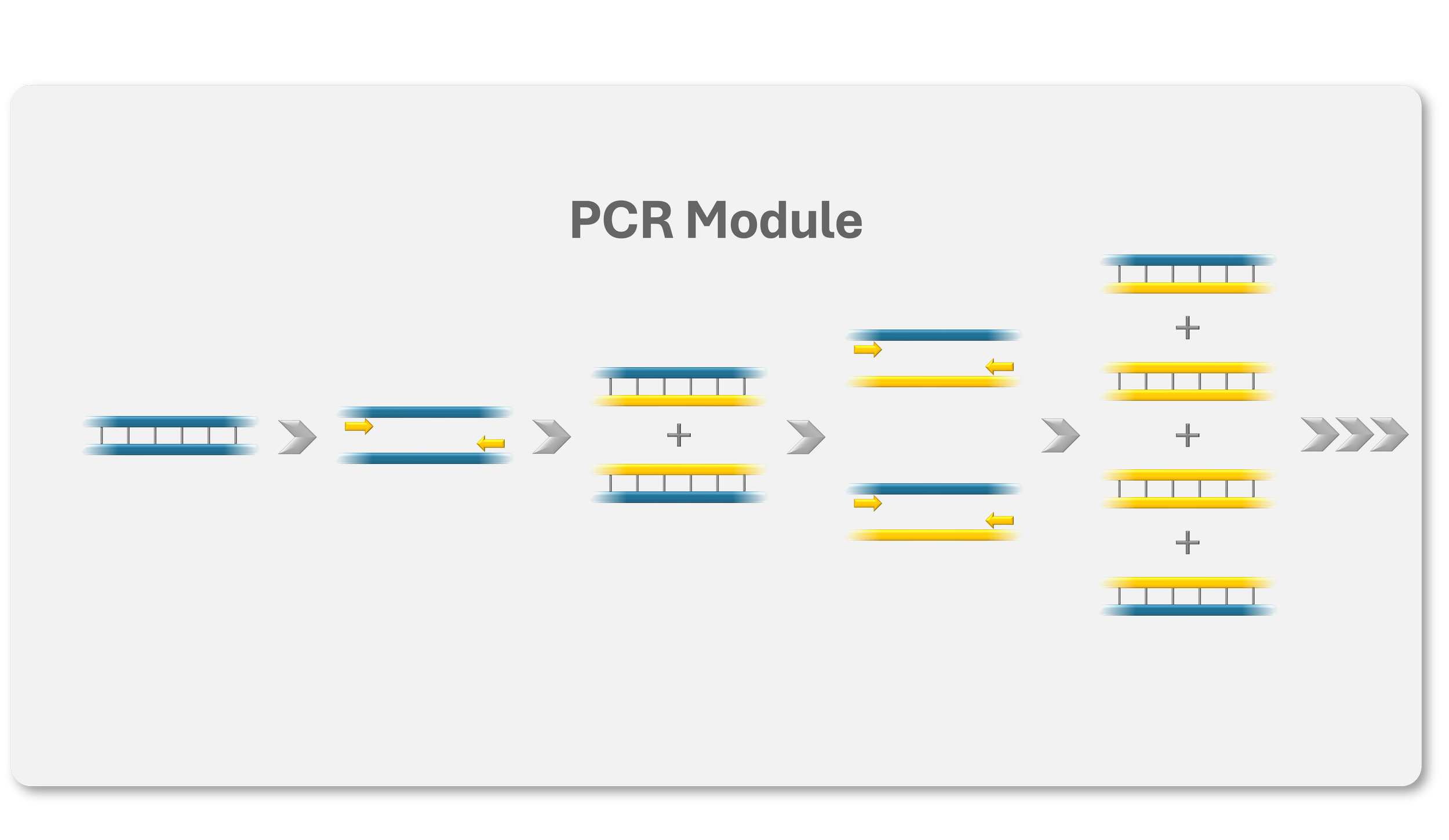
Polymerase Chain Reaction (PCR) is one of the core techniques that powers today’s biotechnology. With the ability to amplify tiny amounts of DNA, PCR makes it possible to build experiments that would otherwise be impossible. From medical diagnostics and genetic research to forensics and environmental testing, PCR underpins many of the tools and technologies that shape modern science and healthcare.
How PCR fits into the larger scope of the Voyager program
The philosophy of BioOdyssey is to give students ownership of their entire project from start to finish. At the same time, the program aims to create a cohesive learning pathway that connects core experiments foundational to both fundamental and advanced molecular biology skills and technologies. In this module, students start from the beginning and design PCR primers to amplify DNA sequences that encode proteins they will synthesize and use in subsequent modules.
PCR Design
In this submodule, students design forward and reverse primers that target specific DNA sequences. They explore how base composition, melting/annealing temperature, and sequence specificity affect primer success and are the basis of understanding the properties and behavior of nucleic acids in a wider range of applications.
PCR reaction
Students apply their designs (or a provided design) to perform PCR amplifying target sequences. This experiment reinforces core skills such as pipetting, reaction setup, and the use of a thermal cycler.
DNA Gel Electrophoresis (further described in the DNA Analysis module)
Following amplification, PCR products will be visualized using agarose gel electrophoresis.
DNA Purification
In this submodule, students will purify DNA away from unwanted molecules leftover from earlier steps. As they learn why clean, high-quality DNA is important, they also discover how a basic understanding of DNA physical and chemical properties - such as its charge - forms the foundation for technologies used throughout modern biotechnology.
DNA Quantification (further described in the DNA Analysis module)
Students will learn about absorbance spectrophotometric and dye-based fluorometric methods for measuring nucleic acid concentrations. By quantifying their samples, they learn how data-driven assessment ensures reliability and consistency in molecular biology experiments.